Headphones or Speakers for a Shared Listening Session?
Headphones or speakers for a shared listening session? Compare access, attention, and sound leakage to choose a setup that fits how people listen.
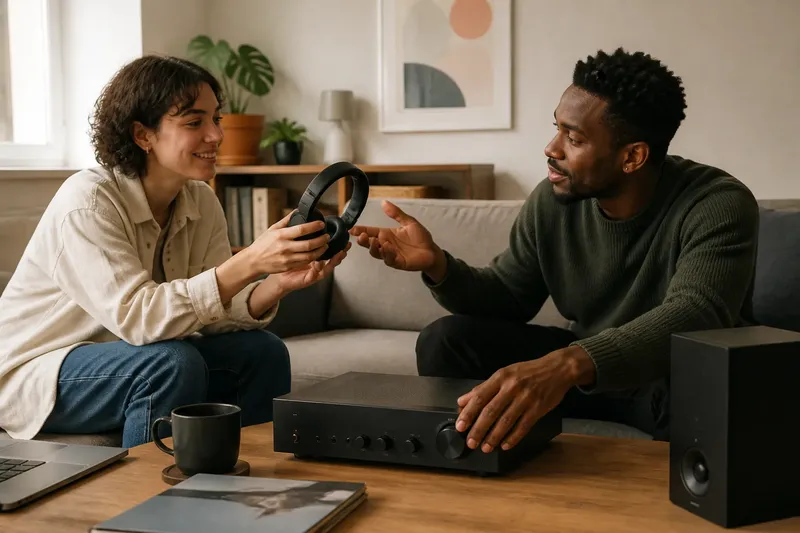
One person reaches for the volume knob while another passes over a pair of headphones: the track is ready, but the listening arrangement is not. Headphones or speakers for a shared listening session depends less on which sounds better in the abstract than on who needs to hear what, and how they want to take part.
Are headphones or speakers better for listening together?
Speakers usually make it easier for a group to share the same musical moment. Everyone can hear the same phrase at once, glance at one another, and react without taking turns with a device. Headphones make listening more private and can reveal detail clearly to one person, but a single pair does not create shared access.
That distinction shapes the conversation. With speakers, a listener can point out a horn entrance or a sudden change in texture while the music continues in the room. With headphones, the listener may need to pause, remove them, or hand them over before anyone else can hear the passage. Those small interruptions matter if the aim is to follow a song together.
Still, speakers are not automatically the considerate choice. A shared room may include someone who is working, resting, or simply not interested in the music. Headphones can let one person listen without turning a common space into an involuntary audience.
How do the two setups change attention?
Headphones put sound close and direct. They reduce many distractions from the room, making quiet backing vocals, panning, edits, and small performance details easier to notice. That close focus can suit solitary listening or a careful first pass through an unfamiliar recording.
Speakers leave more of the room in the experience. The music arrives alongside ordinary sounds and other people’s presence. Rather than shutting out the surroundings, listeners can talk, move, or listen in a looser way. For a group, that can make a session feel like a shared activity rather than several private auditions.
Attention also depends on the kind of listening someone wants. A person tracing a dense arrangement may prefer the isolation of headphones. Someone comparing how a chorus feels to the verse may value being able to hear the track and watch other listeners respond. Neither setup dictates a single correct way to listen; each makes some forms of attention more convenient.
Can several people listen on headphones at once?
Yes, if the playback device and headphones support a practical shared connection. Some devices can send audio to more than one compatible wireless pair. A headphone splitter can share a wired output among listeners, though the connector, device output, and headphone plugs need to match.
Multiple headphones can be useful when a room must stay quiet or when each person wants a close, consistent signal. But the arrangement can make conversation awkward. Listeners may be physically together while each is sealed off from the room, and mismatched headphone fit or preferred volume can make the shared setup less comfortable.
For a small group, consider whether people need to speak during the track or only afterward. If discussion is central, speakers may keep the exchange easy. If quiet is essential, shared headphones can work, provided everyone can hear comfortably and the equipment allows the connection without a tangle of adapters.
When are speakers the more practical choice?
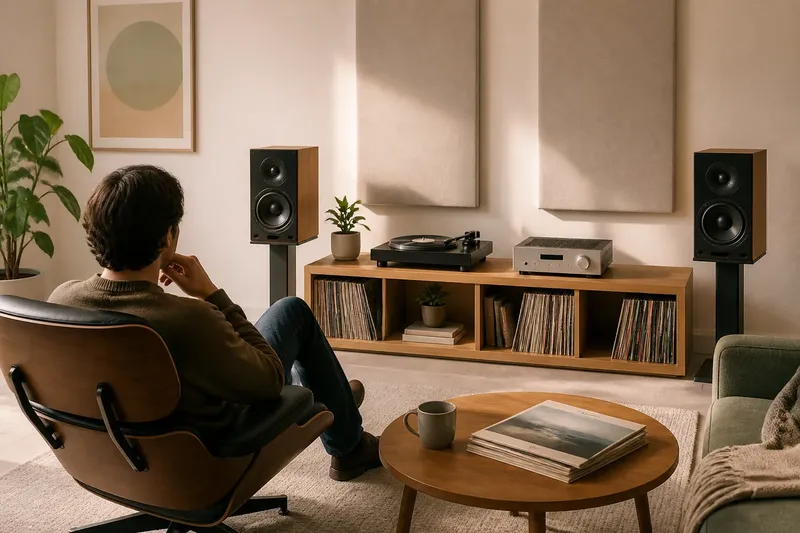
Choose speakers when people need to hear together without passing equipment around. They work well for listening parties, a family room, or a small group comparing performances. A phone or computer can feed a compact speaker, while a stereo system may offer more control over placement and playback.
Room acoustics affect what each person hears. A speaker placed in a corner may sound heavier in the low end; a listener far to one side may hear the stereo image differently from someone seated between the speakers. For a group, a sensible position is one that gives everyone a reasonable view of the sound, not a perfect seat for just one person.
Speakers also make shared access immediate. No one has to wear anything, and a listener can ask to replay a section while the group remains in the conversation. The trade-off is that sound travels beyond the intended audience. Thin walls, nearby sleepers, and shared workspaces can all make private listening a poor fit.
When do headphones make more sense?
Headphones are a better match when listening needs to stay contained, when the room is noisy, or when one person wants to hear without disturbing others. They can also make a commute or late-night session possible when speakers would be intrusive.
For a group sharing headphones, comfort and hygiene deserve a little thought. People may prefer their own pair, especially if the session lasts through several tracks. A cleanable over-ear surface or personal earbuds can make sharing feel more comfortable, but the simplest option may be to take turns on a short excerpt rather than pass headphones through a long album.
Headphones vary in how much outside sound they block and whether they leak sound to nearby people. Open-back designs let more room sound in and out; closed-back designs generally isolate more. The product design and manufacturer guidance determine what a particular model does, so check those details rather than assuming every pair behaves alike.
What should you choose for a shared listening session?
Start with the room and the people in it. If everyone can comfortably hear the same speakers, and the point is to react together, speakers are usually the straightforward choice. If one listener needs quiet or privacy, headphones make more sense. If both needs are present, take turns: speakers for the group discussion and headphones for a focused replay.
Say you and a friend want to compare two versions of the same song in a busy apartment. You could play a short passage through speakers while you both listen for the same entrance, then switch to separate headphones if the room noise makes a quieter detail hard to catch. The observable difference is simple: the speaker pass makes shared reactions immediate, while the headphone pass gives each person a more private listen.
It is not worth spending the session chasing a supposedly ideal arrangement or buying extra gear before knowing what is inconvenient. A borrowed splitter or the speakers already in the room may answer the practical question well enough. Choose around the social purpose, then adjust if people are straining to hear, withdrawing from the conversation, or bothering someone outside the session.
Does sound quality change between headphones and speakers?
It can, but “better” depends on the recording, playback equipment, fit, room, and listener. Headphones often make left-right placement and quiet details conspicuous. Speakers create sound in the room, where distance and reflections affect the result. A mix that feels intimate on headphones may feel broader through speakers, while a noisy room can mask subtle parts of a track.
For a fair comparison, use the same recording and avoid changing several things at once. Keep playback at a comfortable level, and notice what each setup makes easy to hear rather than treating one as the definitive version. If the point is group interpretation, the more useful setup may be the one that helps listeners discuss what they hear.
How can everyone take part without interrupting the music?
Agree on a simple listening cue before pressing play. One person might name the section to notice, such as the transition into the final chorus, then leave space for the track to unfold. Afterward, invite each listener to describe one thing they noticed before the group settles on an interpretation.
For a speaker session, keep the playback controls within reach and make room for a replay request. For headphones, decide whether listeners will share one pair, use a supported multi-pair connection, or listen in turns. These choices prevent the equipment itself from becoming the main event.
Headphones or speakers for a shared listening session is ultimately a question of access: who can hear, who can respond, and whether the music should fill a room or stay with one listener. A good setup leaves the musical moment easy to enter, whether that means gathering around a speaker or giving someone the quiet they need to listen closely.