A Five-Minute Listen Before You Leave Home
A five-minute listen before you leave home gives a familiar song fresh shape as you notice how its parts enter, change, and make room for one another.

Your keys are on the counter, one shoe is on, and a familiar song is playing from your phone. Give it five minutes before you leave. A five-minute listen before you leave home can turn a rushed pause into a close encounter with the song’s arrangement, without asking you to study theory or take notes.
Choose music already at hand: the kitchen speaker, a saved album, or a track in your library. This time, listen for how the song is put together. Notice when a part enters, what changes as the music moves from verse to chorus, and which sounds share the foreground. Keep the attention on the recording from beginning to end.
Choose a familiar track and let it run
Pick something you can start now. Familiarity helps because you already know the broad outline; that leaves room to notice how the parts fit. A song you have heard many times may still hold a quiet backing voice or a small change in the drums that you rarely attend to.
If nothing is playing, open a saved album, music app, or radio station you use. Take the first track that suits the moment instead of searching for the perfect one. A phone speaker is enough if the music is clear at a considerate volume. Headphones are optional.
Let the track run rather than restarting it to catch every entrance. If you have only a short stretch, listen to the section already playing. The aim is to hear relationships inside the music, not to complete an assignment before you leave.
Hear the song’s broad shape before its details
For the first pass, notice the large turns. Does the song begin sparsely and fill out? Does a chorus arrive with a new drum pattern, or does the texture stay steady while the melody changes? You do not need formal names for sections or instruments.
Describe what you hear in plain language. “The low notes keep the same pattern while the chords shift” is useful. So is “the voice gets wider and louder when the chorus starts.” Everyday words can capture arrangement clearly without forcing a technical label.
Listen for contrast as well as repetition. A part may return unchanged, or it may come back with a different rhythm, harmony, or backing sound. That distinction gives you a simple way to hear how the song develops.
Follow how the parts meet
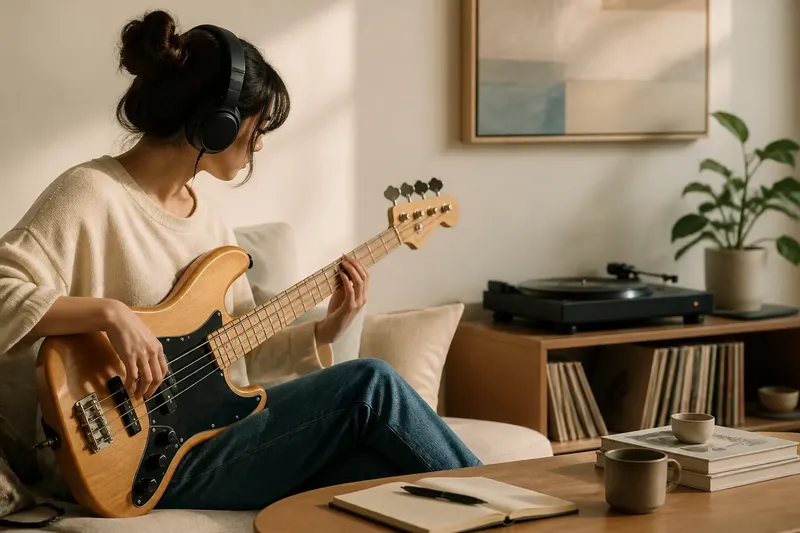
On another pass, choose one relationship rather than one isolated instrument. You might listen for how the drums support the vocal, how a backing voice answers the lead, or how a bass line changes when the harmony moves. This keeps the focus on arrangement: what the parts do together.
Ask when the relationship begins and whether it changes. Does the backing voice appear only at the ends of lines? Does the drum pattern open up in the chorus? Does a sustained chord make a brief vocal pause feel longer? One or two observations are enough.
Imagine a familiar pop song playing in your kitchen. You decide to follow the handclaps behind the chorus. On the next pass, you hear them begin just before the lead vocal returns, then continue beneath the line while the drums keep a steady pulse. Your answer is specific: the claps help mark the chorus entrance and add a brighter layer, rather than replacing the groove. If the claps turn out to repeat through the whole song, the useful tradeoff is different: they provide continuity, while another part creates the contrast.
Keep the listening focused on the music
Stay with the track for the whole exercise. There is no need to carry a prompt into a walk or commute; the song itself gives you enough to notice. If you want to remember a discovery, jot down a short phrase such as “backing voices answer the lead” after the track ends.
Do not spend the available minutes searching for instrument names, reading production notes, or comparing versions unless that is what you genuinely enjoy. Those tasks can wait. For a brief listen, hearing one clear relationship in the arrangement is more useful than collecting details you cannot yet connect.
If the sound is hard to hear, move to a quieter room or use a playback source you already have at a comfortable level. If the track still feels blurred, follow a larger contrast, such as a change in density or the entrance of the chorus, rather than straining to identify a faint part.
Which questions help you hear the arrangement?
Do I need to know the names of the instruments?
No. Describe a sound by its place, tone, or action: a low repeated note, a bright chord, or a voice answering the singer. Naming the instrument is optional.
What should I listen for if the song sounds dense?
Choose a large change, such as a new layer entering or the texture thinning before a chorus. It is easier to hear a shift in the whole arrangement than to separate every part at once.
Is it better to replay the whole song or one section?
Use the whole track if it fits the time you have. Otherwise, replay a section where the relationship is clear, such as a chorus that brings in backing vocals.
What if I lose track of the part I chose?
Let the song continue and return to the part when you hear it again. If it stays hard to follow, switch to a more obvious feature, such as the change from verse to chorus.
Make the next listen easy to begin
A small routine is easier to repeat when it has no paperwork. You do not need to rate songs, build a special playlist, or remember every observation. Those extras are not worth the effort unless you enjoy them. A brief note after listening can help, but it should serve your curiosity rather than become another chore.
Next time, choose a different relationship: melody against harmony, voice against accompaniment, or a repeated pattern against a changing texture. The five-minute listen before you leave home can make a familiar song feel newly organized, simply by showing how its parts enter, support one another, and make room for change.